The Galilean Four
The Galilean Four is a set of four backlit wooden reliefs inspired by Io, Europa, Ganymede, and Callisto — Jupiter’s largest moons.
Each piece is built from hexagon-patterned plywood, cut, sanded, painted, and assembled by hand. The works are not literal maps, but material interpretations: translating planetary character into color, texture, and light.
The Four Moons
Io
Volcanic and restless.
Its surface is marked with burned craters, created using a pyrograph tool to etch heat directly into the wood — a physical process for a moon defined by extreme geology.
Europa
Cold, layered, and deceptive.
Multiple paint layers create a deep, icy surface, while fine red fractures — made using nail polish — echo Europa’s distinctive lineae and hint at the complexity beneath the ice.
Ganymede
Massive and quiet.
The largest moon in the Solar System needed no added surface effects. Its grayscale hexagonal pattern stands on its own, relying on scale, rhythm, and contrast to carry the piece.
Callisto
Ancient and scarred.
White-painted craters accumulate across the surface, overlaid with flicked silver and gold paint — subtle highlights that catch the light like distant impacts frozen in time.
Light & Materials
Each relief is backlit with integrated LED lighting, carefully tuned to a complementary white color temperature:
warmer tones for Io
cooler, purer whites for Europa and Ganymede
softer, dimmer light for Callisto
The light functions less as illumination and more as presence — forming a subtle halo around each moon, separating it from the wall and giving the pieces a quiet sense of suspension, as if they were hovering rather than mounted.
The Galilean Four
The Galilean Four is a set of four backlit wooden reliefs inspired by Io, Europa, Ganymede, and Callisto — Jupiter’s largest moons.
Each piece is built from hexagon-patterned plywood, cut, sanded, painted, and assembled by hand. The works are not literal maps, but material interpretations: translating planetary character into color, texture, and light.
The Four Moons
Io
Volcanic and restless.
Its surface is marked with burned craters, created using a pyrograph tool to etch heat directly into the wood — a physical process for a moon defined by extreme geology.
Europa
Cold, layered, and deceptive.
Multiple paint layers create a deep, icy surface, while fine red fractures — made using nail polish — echo Europa’s distinctive lineae and hint at the complexity beneath the ice.
Ganymede
Massive and quiet.
The largest moon in the Solar System needed no added surface effects. Its grayscale hexagonal pattern stands on its own, relying on scale, rhythm, and contrast to carry the piece.
Callisto
Ancient and scarred.
White-painted craters accumulate across the surface, overlaid with flicked silver and gold paint — subtle highlights that catch the light like distant impacts frozen in time.
Light & Materials
Each relief is backlit with integrated LED lighting, carefully tuned to a complementary white color temperature:
warmer tones for Io
cooler, purer whites for Europa and Ganymede
softer, dimmer light for Callisto
The light functions less as illumination and more as presence — forming a subtle halo around each moon, separating it from the wall and giving the pieces a quiet sense of suspension, as if they were hovering rather than mounted.

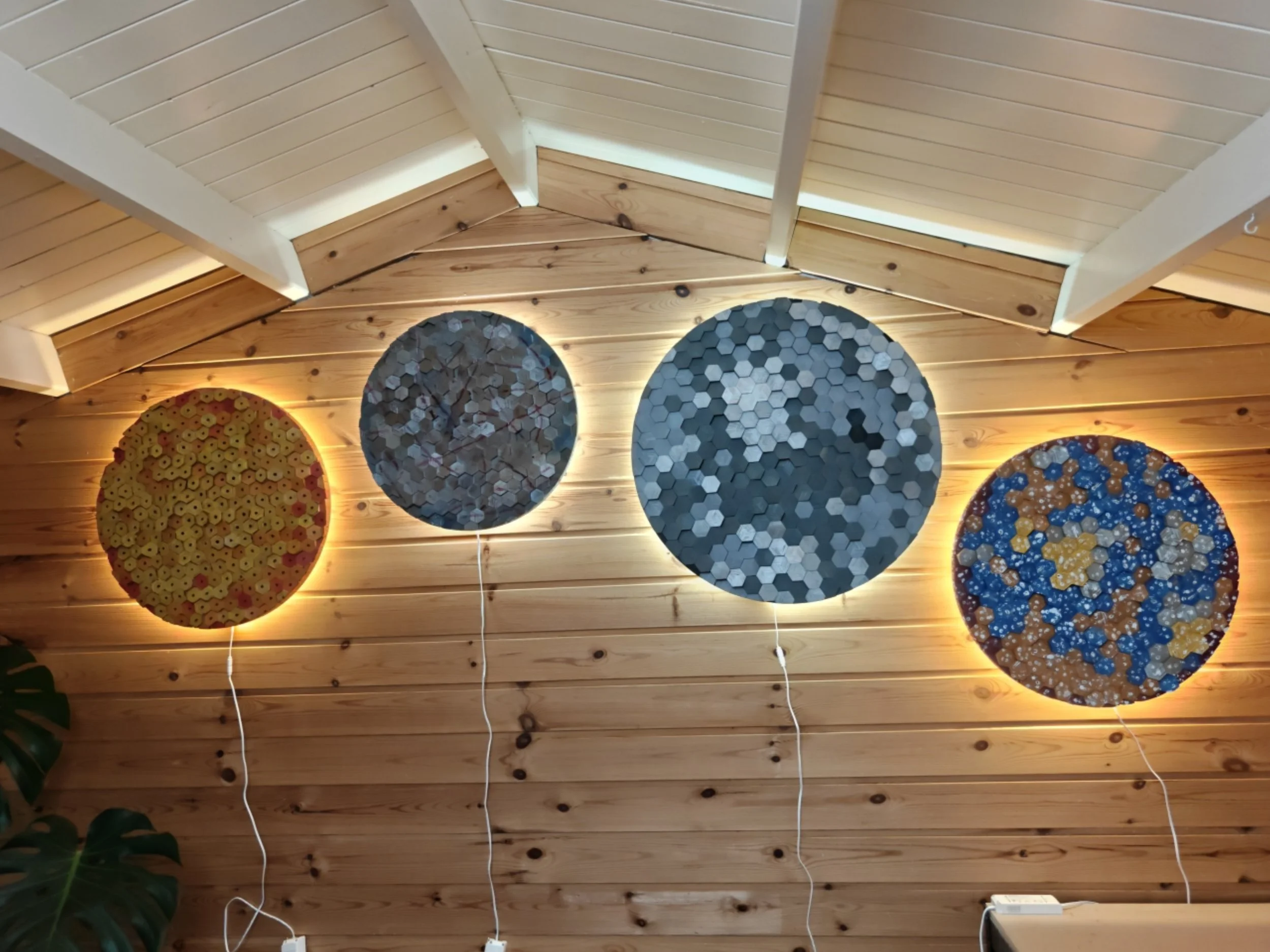 Image 1 of 10
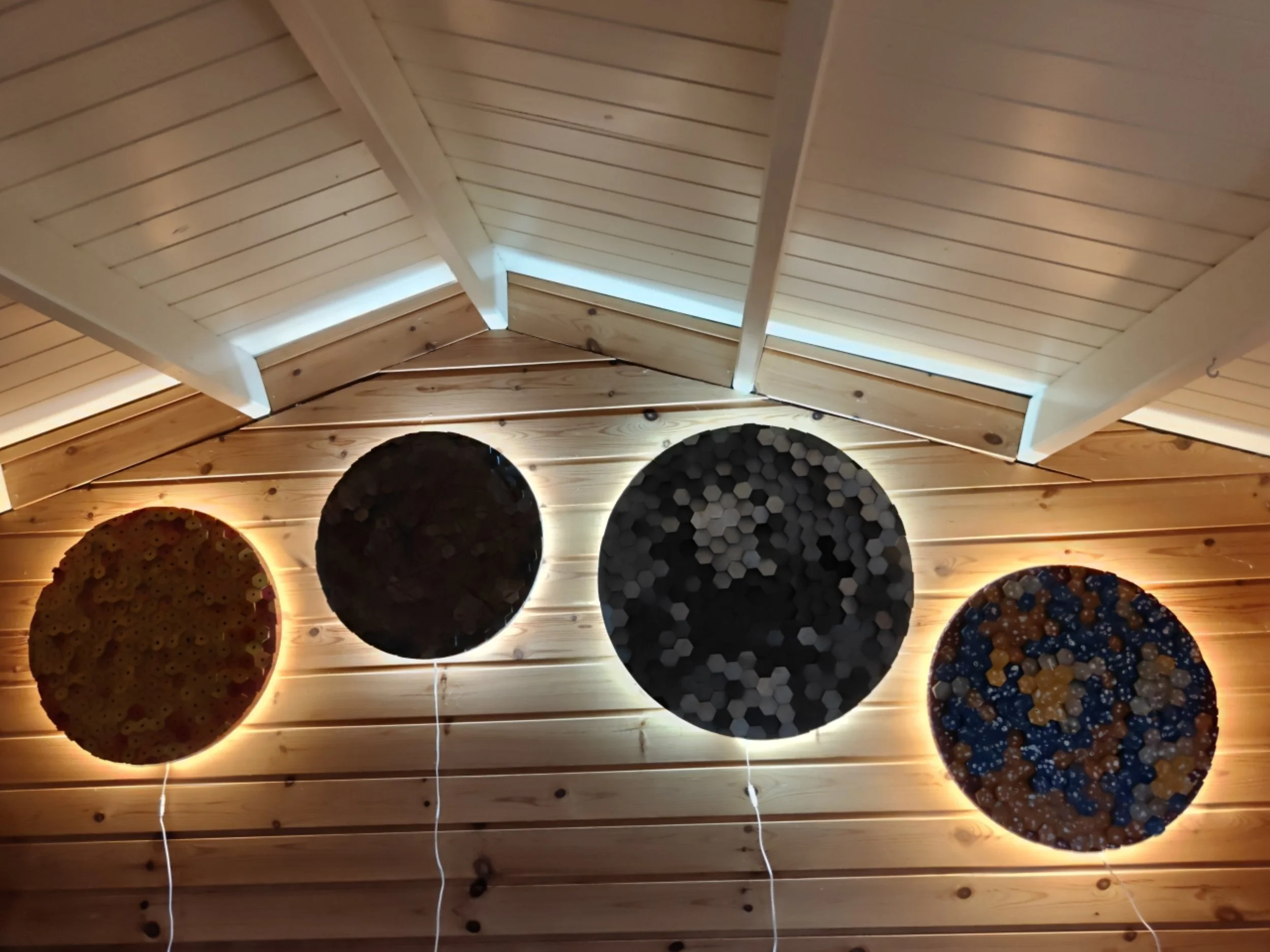 Image 2 of 10
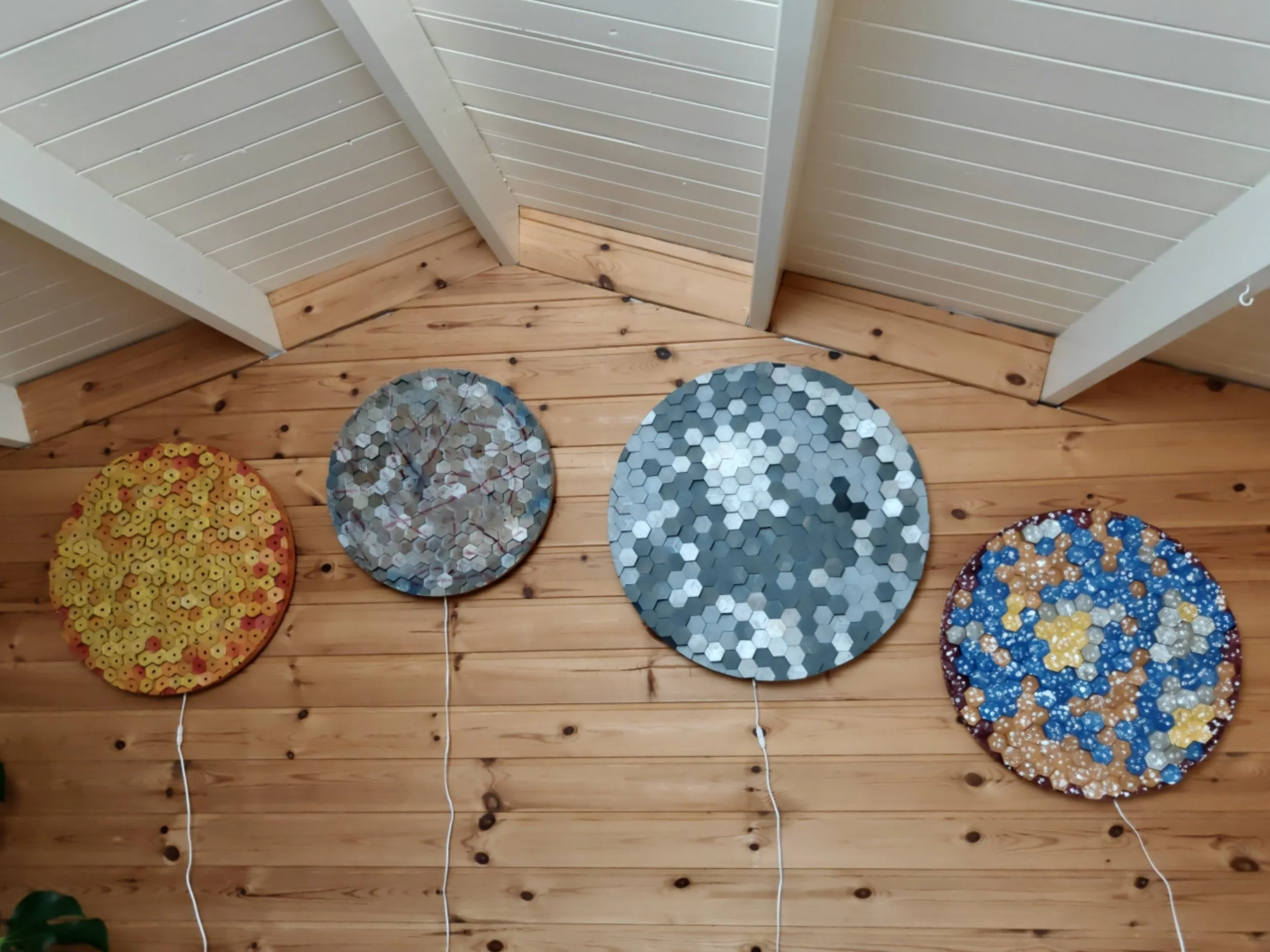 Image 3 of 10
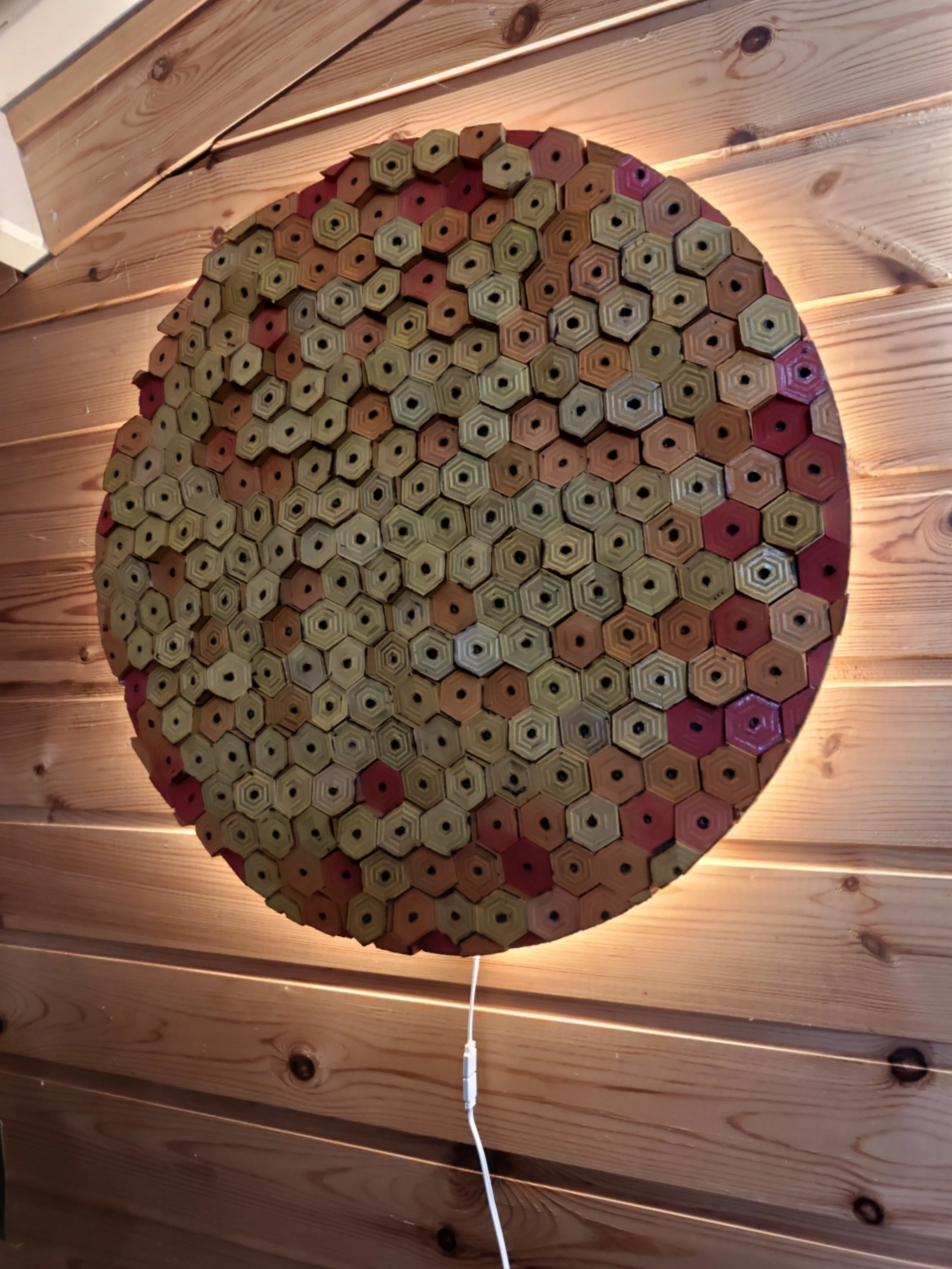 Image 4 of 10
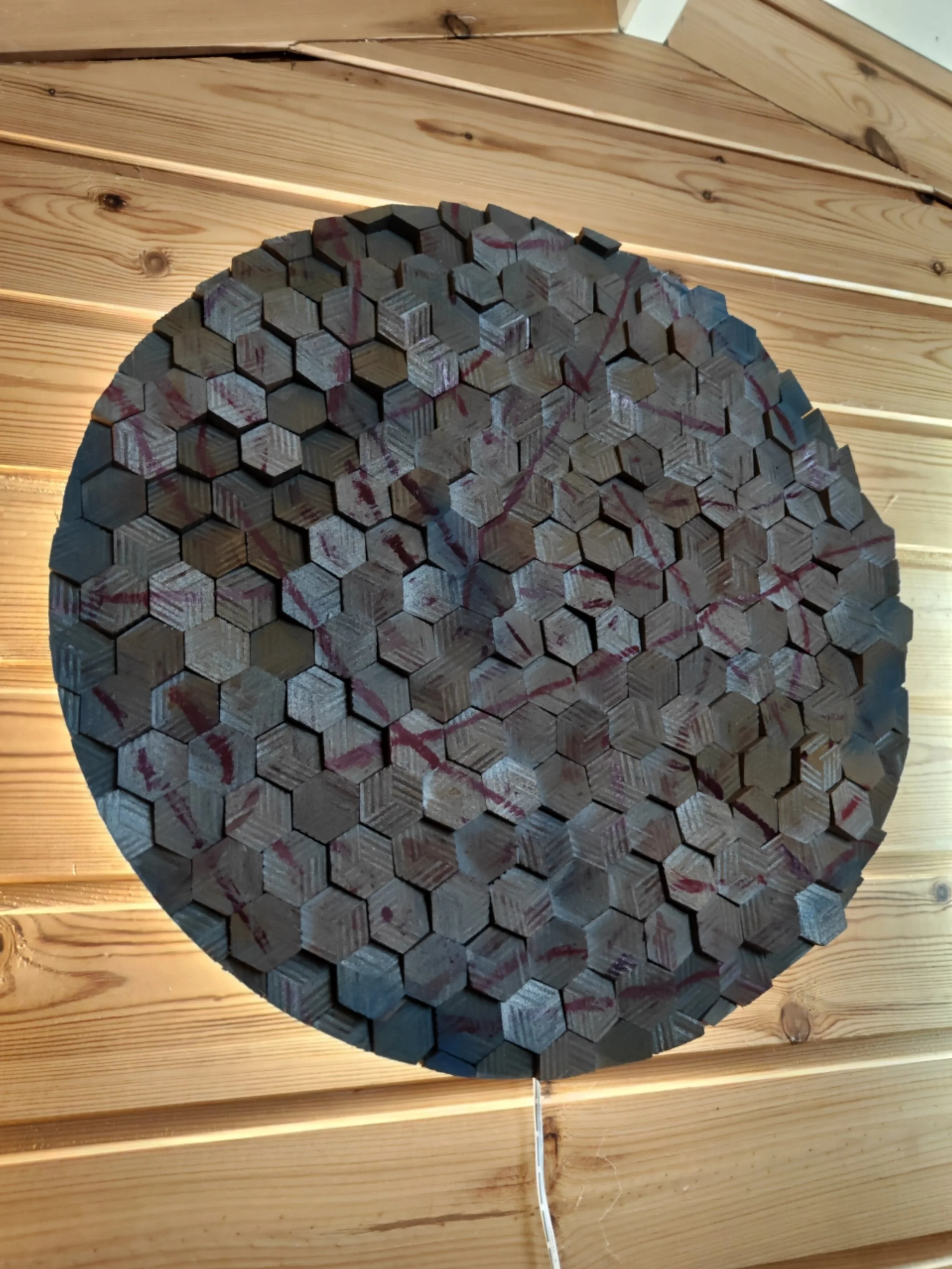 Image 5 of 10
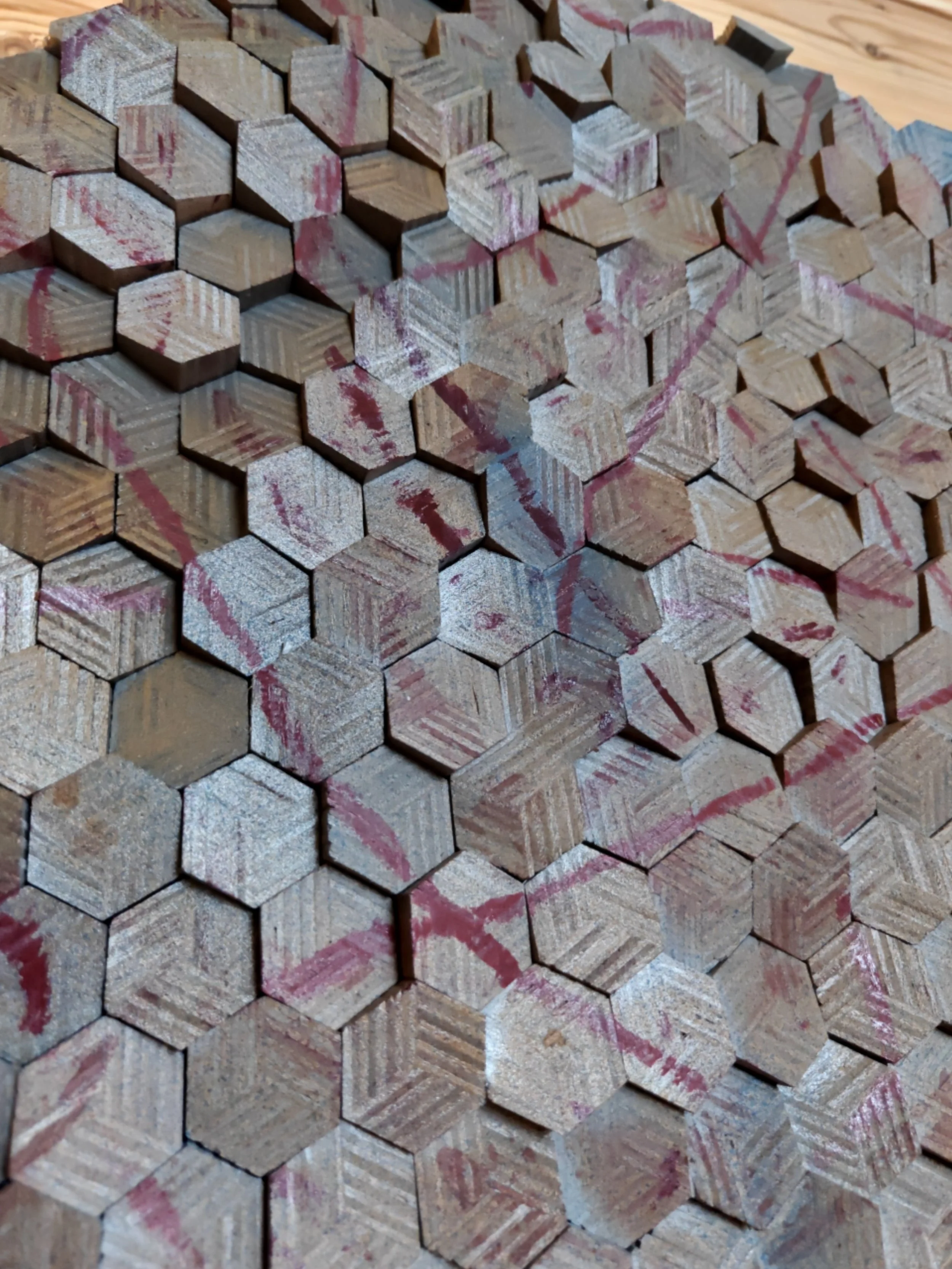 Image 6 of 10
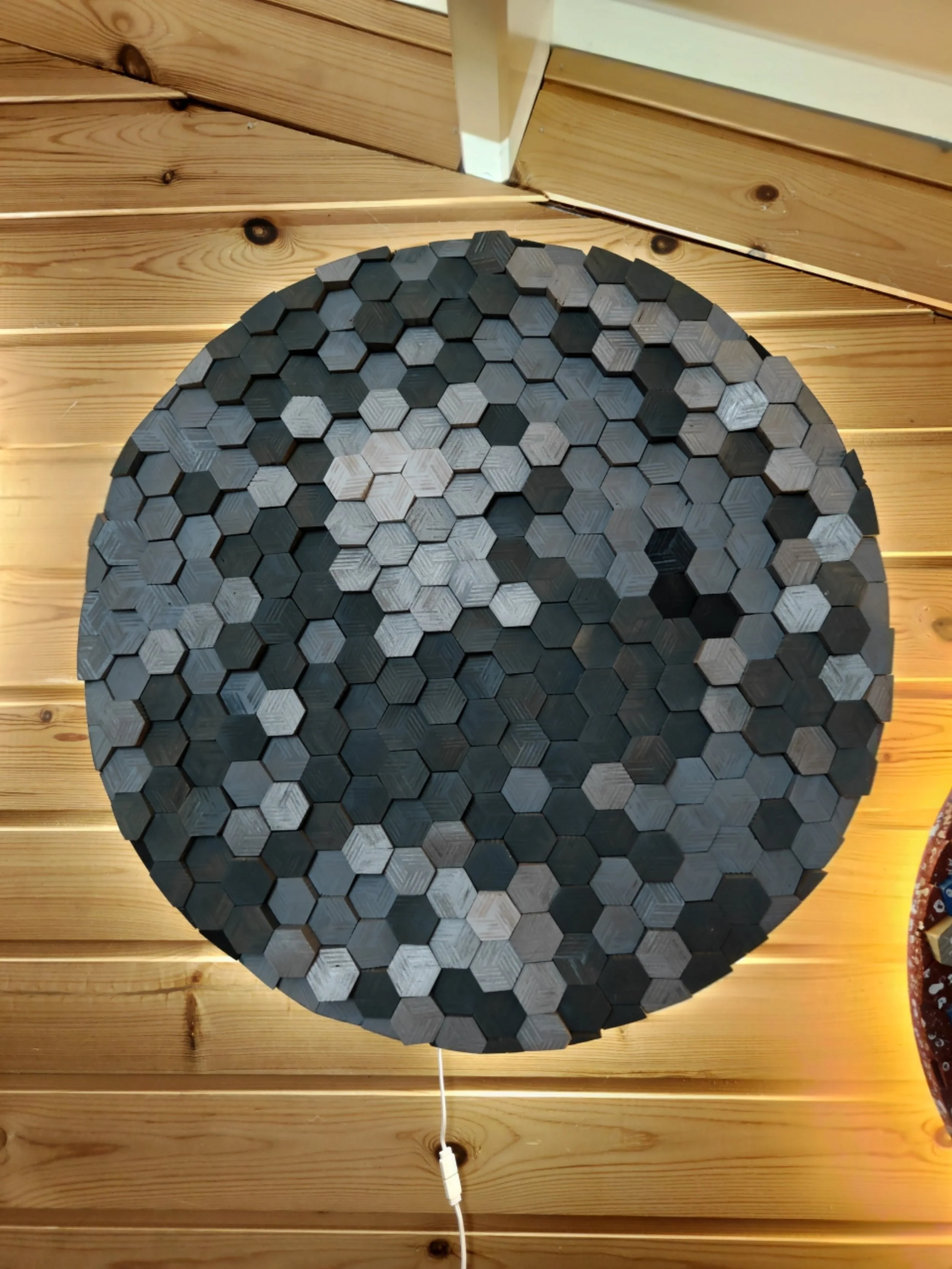 Image 7 of 10
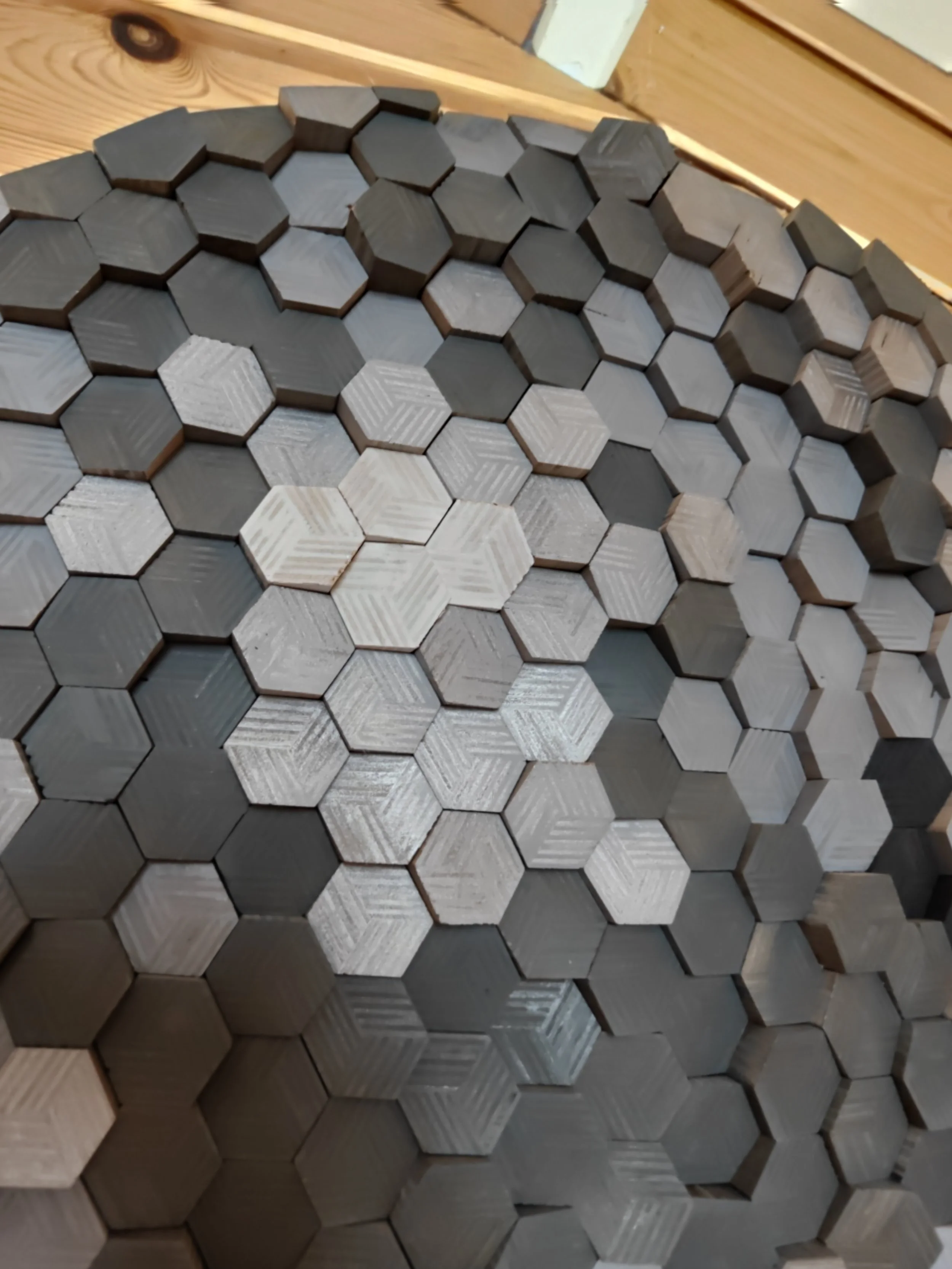 Image 8 of 10
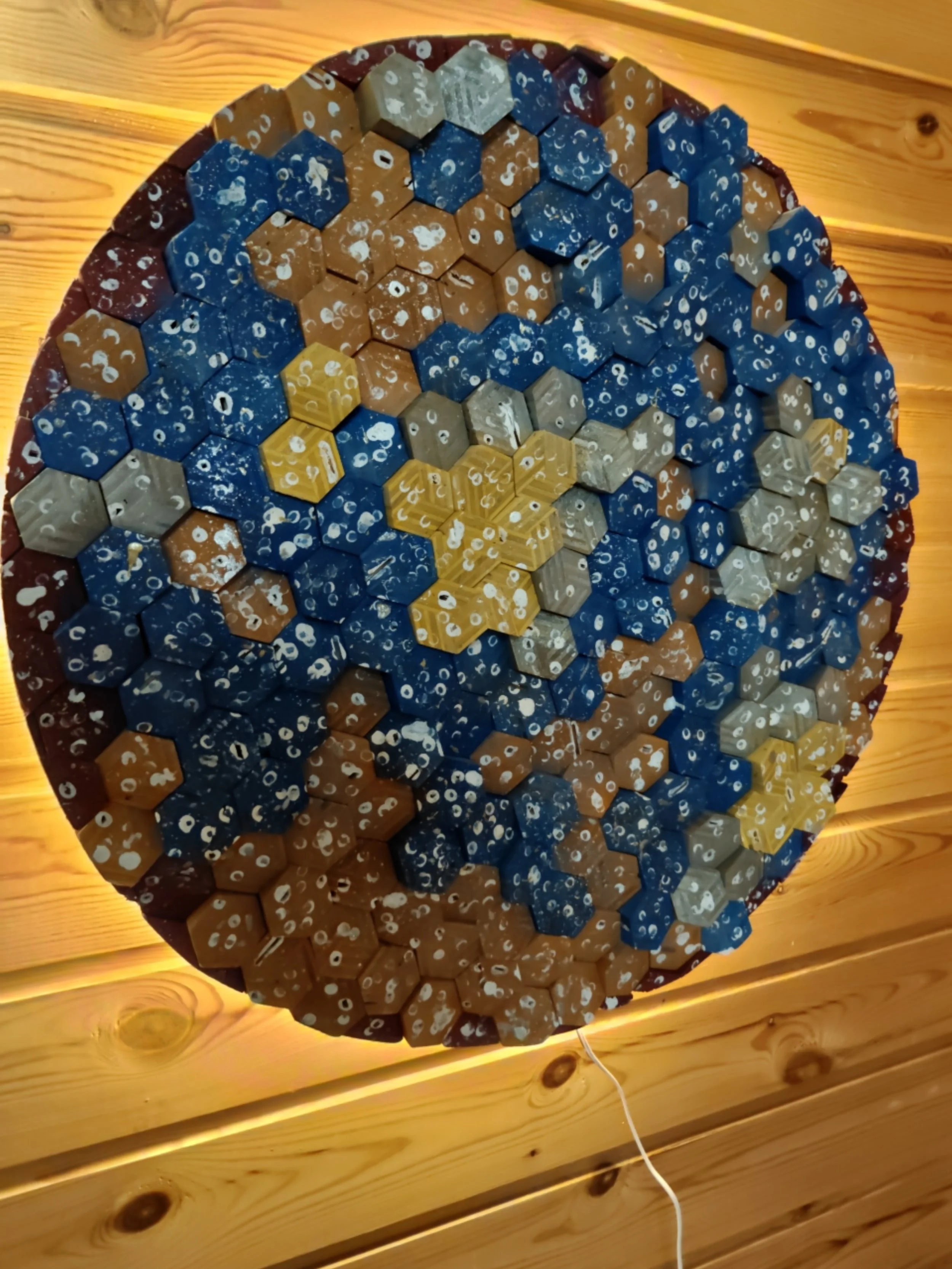 Image 9 of 10
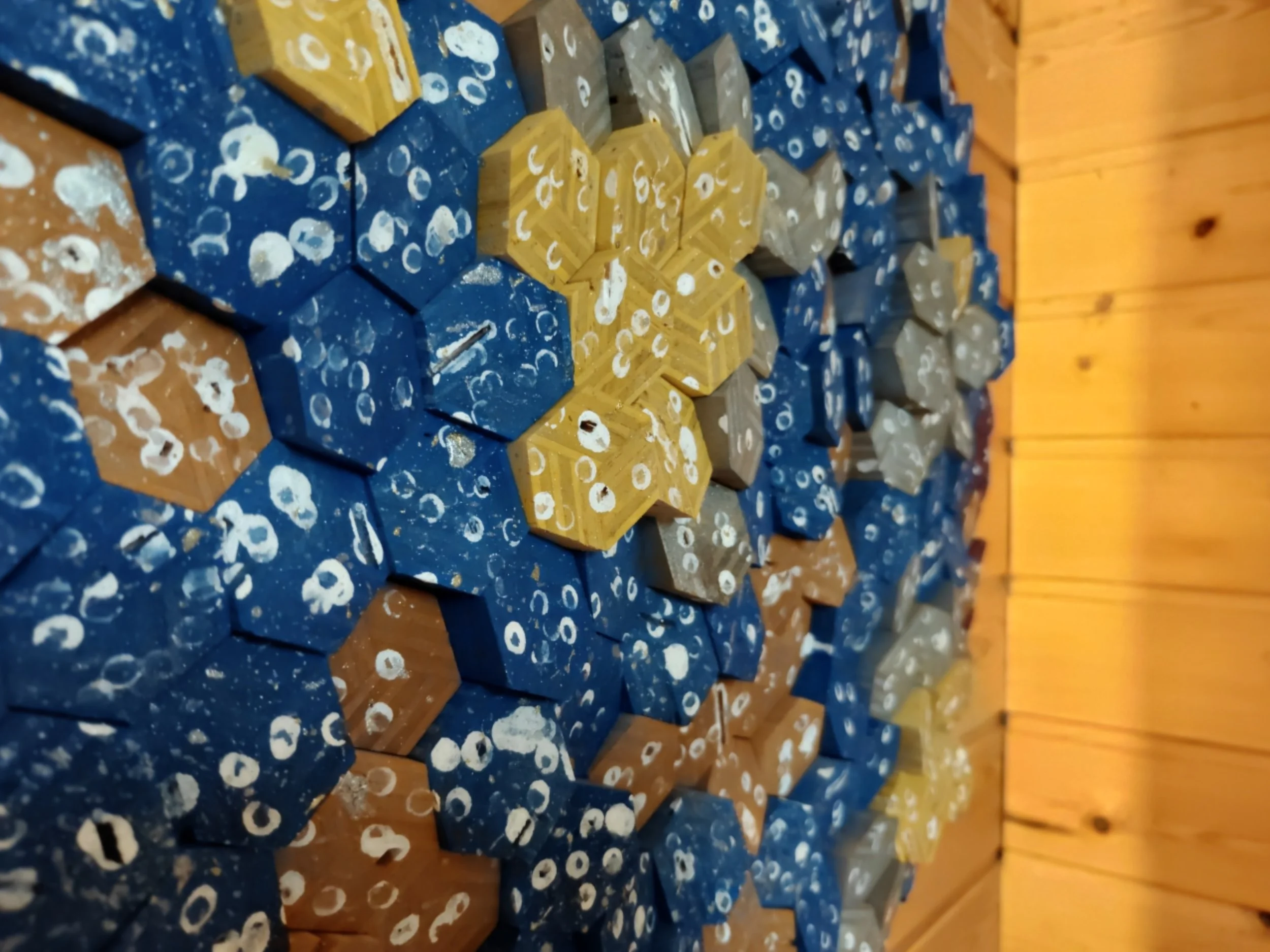 Image 10 of 10